La diferencia entre el ROI proyectado de la planta y el rendimiento operativo real generalmente se reduce a un solo error inicial: la incompatibilidad de equipos. Al instalar una planta de mampostería o modernizar las instalaciones existentes, los gerentes de adquisiciones a menudo se centran en gran medida en el precio inicial de la etiqueta de un Máquina para fabricar bloques de hormigón y adoquines en lugar de evaluar su alineación técnica con las demandas específicas de su mercado.
Elegir entre un sistema económico y una instalación automatizada de última generación requiere un análisis detallado de la tecnología de vibración, los ciclos de moldeo, la adaptabilidad de los materiales y los costos operativos a largo plazo. Si su demanda diaria es de 5000 bloques huecos estándar, invertir en una máquina de alta gama y gran resistencia podría prolongar innecesariamente el período de recuperación de la inversión. Por el contrario, utilizar una máquina de bajo costo para cumplir con contratos gubernamentales de pavimentación de gran envergadura resultará en una rápida degradación del equipo y una densidad de bloques inconsistente.
Comprender el núcleo: dinámica de vibraciones y densidad de bloques
El elemento central de cualquier equipo para la fabricación de bloques es su sistema de vibración. La fuerza de compactación determina la integridad estructural, la tasa de absorción de agua y el acabado superficial del producto final. Actualmente, el mercado se divide en dos tecnologías de alto rendimiento predominantes: la vibración mecánica tradicional (a menudo catalogada como robusta tecnología alemana) y la moderna servovibración.
La vibración de los motores estándar se basa en ejes excéntricos. Si bien son increíblemente duraderos y capaces de generar una fuerza centrífuga masiva (como se observa en la máquina de adoquines de vibración fuerte TM15000 de tecnología alemana), funcionan con una curva de frecuencia fija. El arranque y la parada de estos motores pesados requieren fracciones de segundo más por ciclo, y consumen corrientes de arranque significativas.
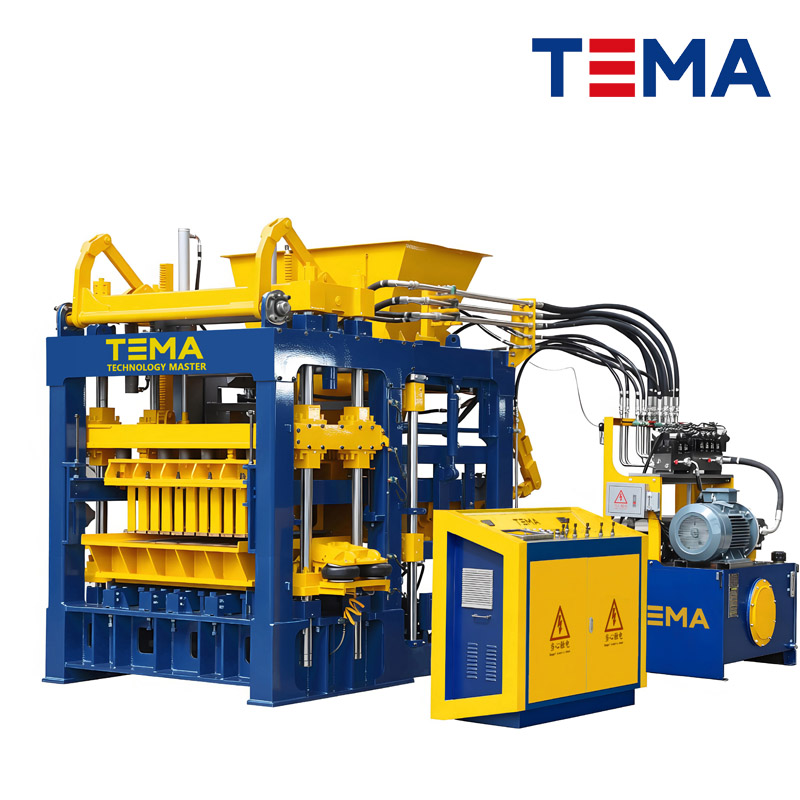
A Sistema de vibración servoaccionada para máquina de bloques de hormigónComo el que incorpora el modelo TM10000, este sistema modifica esta dinámica. Los servomotores ofrecen tiempos de respuesta instantáneos. Pueden pasar de una vibración de alimentación de baja frecuencia (que permite que el material fluya suavemente hacia el molde) a una vibración de compactación de alta frecuencia en cuestión de milisegundos. Este ajuste dinámico de frecuencia no solo reduce el ciclo de moldeo entre 1,5 y 2 segundos, sino que también garantiza una densidad altamente uniforme en formas de adoquines complejas.
Tabla 1: Comparación técnica de sistemas de vibración
| Parámetro | Vibración estándar del motor de CA | Vibración del servomotor |
| Tiempo de respuesta | 0,5 - 0,8 segundos | < 0,05 segundos |
| Ajuste de frecuencia | Fijo o requiere variador de frecuencia (más lento) | Ajuste continuo en tiempo real |
| Consumo de energía | Consumo constante, corriente máxima elevada | Entre un 20% y un 30% menos en general |
| Niveles de ruido | 95 - 105 dB | 85 - 90 dB |
| Aplicación ideal | Bloques huecos estándar, muros de contención pesados | Adoquines entrelazados, ladrillos de revestimiento de colores |
Cómo aumentar la producción: De modelos económicos a modelos de alto rendimiento
La producción diaria prevista debe determinar el nivel de automatización y el tamaño físico de la máquina. La gama de máquinas TEMA ofrece una clara flexibilidad para el escalado de capacidad.
Para las empresas emergentes regionales o las plantas que abastecen a la construcción residencial local, un alto rendimiento no implica necesariamente un alto costo. Modelos como el TM6000 y el TM5000 están diseñados específicamente para una producción concentrada. El TM5000, una máquina económica para la producción de bordillos, elimina los marcos robustos innecesarios para bloques huecos de gran tamaño, concentrando su presión hidráulica en el moldeo profundo requerido para los bordillos de hormigón.
A medida que las demandas de producción aumentan hacia proyectos municipales o suministro comercial a gran escala, la intervención manual se convierte en un cuello de botella. Aquí es donde la actualización a un Línea de producción automática de bloques de hormigón Se convierte en una necesidad matemática en lugar de un lujo. Modelos como el TM12000 (tecnología alemana de vanguardia) están diseñados para integrarse a la perfección en circuitos totalmente automatizados, incluyendo la manipulación de palets en seco y en húmedo, cámaras de curado automáticas y cubizadores robóticos de paletización.
La tabla que aparece a continuación ilustra la variación de la producción proyectada en función del nivel de la máquina y la configuración del molde.
Tabla 2: Matriz de producción estimada (turno estándar de 8 horas)
| Nivel del modelo | Enfoque en el equipo | Bloque hueco de 8" (400x200x200) | Adoquín rectangular (200x100x60) |
| TM4000 | Precio económico, alto rendimiento (cenizas volantes) | 6.000 unidades | 21.000 unidades |
| TM6000 | Bajo costo, alto rendimiento | 9.000 unidades | 31.500 unidades |
| TM10000 | Tecnología de vibración servo | 15.000 unidades | 42.000 unidades |
| TM15000 | Tecnología alemana, vibración fuerte | 30.000 unidades | 90.000 unidades |
(Nota: El rendimiento real varía según la calidad del árido, la pericia del operario y las dimensiones de los palés. Los tiempos de ciclo se basan en niveles óptimos de humedad del árido).
Adaptabilidad de los materiales: cenizas volantes, escoria y hormigón estándar.
La ubicación geográfica de su planta determina la disponibilidad de materias primas, lo que a su vez influye en la selección del equipo. No todas las máquinas procesan todos los agregados de la misma manera. Las mezclas de concreto estándar que utilizan piedra triturada y arena de río fluyen de forma predecible en los moldes. Sin embargo, los subproductos industriales como las cenizas volantes, las cenizas de fondo o la escoria de acero se comportan de manera diferente.
Las cenizas volantes, por ejemplo, requieren un control específico de la humedad y una presión de compactación constante para lograr la unión química y la resistencia estructural necesarias sin desmoronarse al desmoldar. La TM4000 está diseñada específicamente como una máquina de alto rendimiento para la fabricación de ladrillos de cenizas volantes. Su colector hidráulico y la distribución de presión del cabezal compactador están calibrados para aplicar una fuerza uniforme y constante, eliminando las microburbujas de aire que tienden a quedar atrapadas en las mezclas de cenizas volantes. El uso de una máquina estándar de alta velocidad con solo vibración para las cenizas volantes suele resultar en altas tasas de rechazo debido a la microfisuración durante la fase de curado.
Cálculo del costo total de propiedad (TCO) más allá del precio de venta
Evaluar la adquisición de maquinaria basándose únicamente en el precio FOB suele generar un flujo de caja negativo en el tercer año. El costo total de propiedad abarca el consumo de energía, el desgaste de los moldes, los ciclos de reemplazo del aceite hidráulico y los gastos generales de mano de obra.
Las máquinas automatizadas de alta gama requieren una mayor inversión inicial, pero reducen drásticamente los costos variables. Un sistema servoaccionado reduce el consumo eléctrico en aproximadamente un 25 % por turno. En un año de producción de 300 días, operando a 150 kW/h, el ahorro energético por sí solo puede compensar la diferencia de precio entre un modelo estándar y uno servoaccionado en 24 meses.
Además, la precisión de los sistemas hidráulicos avanzados minimiza la tensión mecánica aplicada a los moldes y paletas. Las máquinas tradicionales con vibraciones agresivas y descontroladas tienden a provocar fatiga prematura del metal en las cajas de los moldes, lo que requiere su reemplazo cada 80 000 ciclos. Las máquinas que utilizan tecnología de vibración alemana o sistemas servo controlan con precisión la amplitud, extendiendo la vida útil del molde más allá de los 120 000 ciclos y reduciendo significativamente los gastos anuales de mantenimiento.
Su estrategia de adquisición debe priorizar la adaptación del tonelaje hidráulico y la lógica de vibración a su mezcla específica de agregados, al tiempo que garantiza que el sistema de control permita una futura expansión modular cuando aumente su cuota de mercado.


 English
 français
 русский
 español
 العربية